Bad beats live on in poker players’ memories, but the truly legendary hands come when a great player stares destiny right in the face, fires out a huge bluff, and doesn’t blink even once at the poker odds.
The possibility of disaster with big bluffs and hero calls is monumental, but when plays like that work out, they live forever.
That tension is the whole appeal of learning how to bluff in poker. Any player can tell you that it’s not just about the cards. It’s more about the opponent, and someone’s assessment of how much pressure it will take to make them crack.
In these seven hands, players threw the solvers away and simply passed the most epic gut check of their lives.
1. Chris Moneymaker’s King-High Bluff (2003 WSOP Main Event)
This hand changed poker worldwide.
Chris Moneymaker was a humble accountant from Tennessee who had somehow qualified for the 2003 World Series of Poker Main Event through a $39 online satellite. It was his first live tourney, and he ultimately had to tangle with none other than Sammy Farha, an incredibly canny professional gambler who literally lived in Las Vegas.
You really couldn’t ask for a more lethally-clever opponent.
But Moneymaker wasn’t timid at all. In fact, he was at his most bold in a hand against Farha.
On the river, the board showed a lone nine with three spades in play. Farha held top pair with queen-nine. Decent. Moneymaker, however, had missed everything, holding nothing but king-seven.
He didn’t even have a pair.
Rather than give up on the pot, he moved all-in. Farha stared him down for a very long time, correctly guessed Moneymaker had missed his draw, and then folded anyway.
ESPN’s Norman Chad called it the “bluff of the century,” and it became the iconic moment in Moneymaker’s Cinderella win that helped spark the online poker boom.
Millions of amateurs suddenly believed that they, too, could bluff their way past the best in the game and become an overnight sensation.
2. Phil Ivey’s Queen-High Assault on Paul Jackson (2005 Monte Carlo Millions)
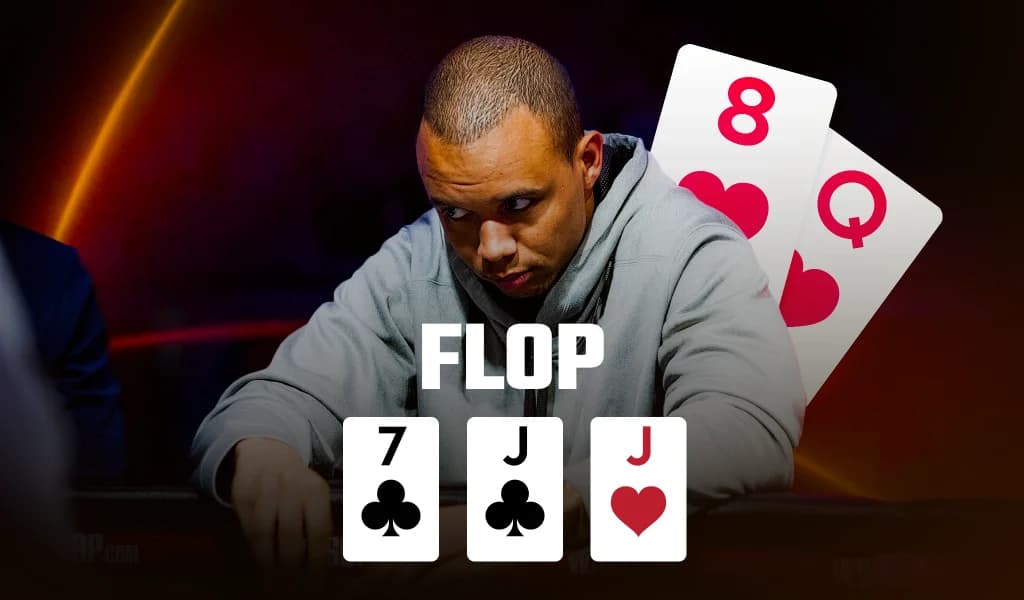
Phil Ivey’s hand against English player Paul Jackson two years later showed that the pros are willing to fire away with nothing in the chamber as well. The two players were heads-up for the title at the 2005 Monte Carlo Millions, with $1 million on the line. Jackson limped with a weak six-five offsuit, and Ivey raised from the BB holding queen-eight. The flop came jack-jack-seven.
No one had anything. But that doesn’t stop sharks like these from trying to gobble up a kill anyway.
What followed was a five-bet back and forth war that totally disregarded poker odds, and which ended with Ivey moving all-in holding nothing but queen-high. Jackson, who was holding almost nothing himself, found a correct fold.
Commentators watching tableside called it one of the most amazing hands ever played, with both men bluffing heavily at the exact same time. Ivey later said he was completely certain Jackson was bluffing, but the sheer size of the betting action made it one of the boldest all-ins in televised poker history.
ESPN’s own coverage of the tournament captured just how tense the room got as Ivey took his time before finally shoving, describing Jackson as visibly rattled by the pause alone. Ivey went on to close out the title, but it’s this hand that still fuels ongoing discussion.
3. Doyle Brunson’s Ten-Deuce Miracles (1976 and 1977 WSOP)
There’s really no making sense of it. These were hands of destiny.
In both 1976 and 1977, “Texas Dolly” Doyle Brunson found himself all-in during the WSOP Main Event holding ten-deuce, one of the weakest starting hands in poker. In both years, he needed to improve to beat a better hand. And both years, the board delivered exactly what he needed to win the bracelet.
The odds of pulling that off ever are quite long. Doing it in back-to-back years is madness, and turned the hand into poker folklore. Naturally, the hand is now nicknamed “the Doyle Brunson” in his honor.
It’s really an unfair hand. Brunson was already one of the most feared players in the game, even in 1976. He had helped build the game by co-founding the modern professional poker circuit and writing Super/System, one of poker’s defining first-wave strategy guides.
For him to get this much help from Lady Luck is just too much. But it shows that poker isn’t just strategy and psychology. The cards have a say in how they run out, and that’s part of the random mystique of Texas Hold’em.
4. Tom Dwan’s Queen-Ten Push Against Barry Greenstein (High Stakes Poker)
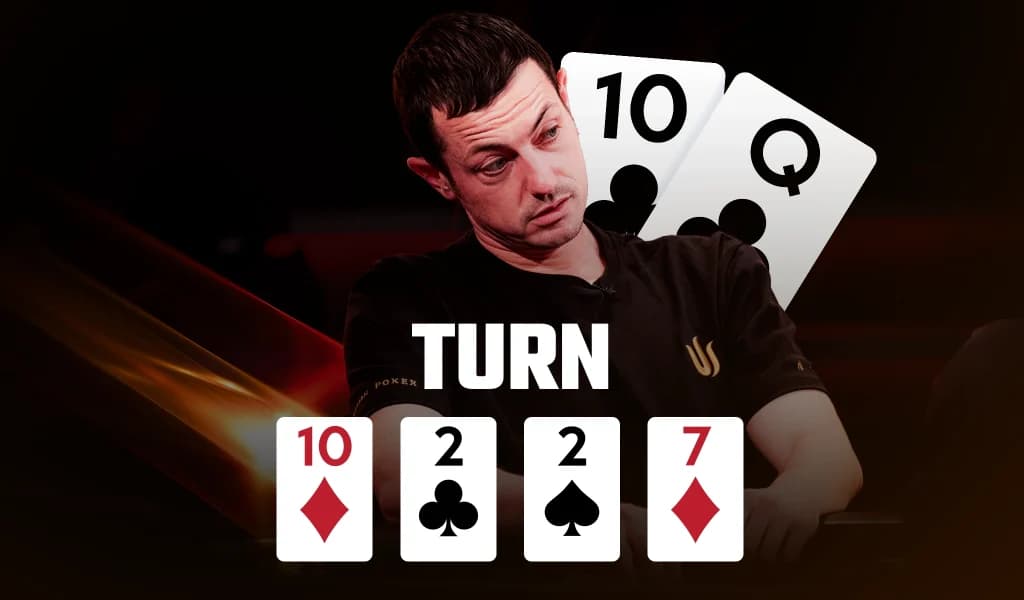
By the time Tom “durrrr” Dwan showed up on television, he’d already built a reputation as one of the most terrifying opponents in online poker. He was famous for being able to play any two cards. There was no way to tell with any certainty what he might be holding.
His session against veteran pro Barry Greenstein on High Stakes Poker turned that reputation into legend.
Dwan had QT on a flop of T-2-2, so he had top pair and a decent kicker. Peter Eastgate, the reigning WSOP Main Event champion at the time, had actually flopped trip deuces. Greenstein had pocket aces, thoroughly dominating Dwan and unaware he was already behind Eastgate too.
Dwan didn’t care. He was aggressive on every street, representing a monster with his trademark blank expression that just wouldn’t crack. Dwan was unreadable.
Both Eastgate and Greenstein couldn’t withstand the pressure. Eastgate laid down his trips, and Greenstein, one of the most respected minds in the game, let go of his beloved aces. Dwan later said he was 90% sure Eastgate had him beat the whole time.
Dwan built an entire career, including the notorious “durrrr Challenge” against Patrik Antonius and Daniel Cates, on exactly this kind of high-variance aggression. He’s since gone on to win multi-million-dollar pots in televised games across Macau and Montenegro. But this particular hand shows the value of having a reputation for loose play. You really never know what a player like that is holding, and every call becomes a little spooky.
5. Lex Veldhuis’ Ice-Cold Call on Doyle Brunson (High Stakes Poker, 2009)
Not every legendary risky play is a bluff. Some of the gutsiest moments in poker history are all about hero calls. In 2009, young Dutch pro Lex Veldhuis was trying to deal with Doyle Brunson.
The board was 6-2-3-J-4, and Veldhuis had 9-2. Brunson put the screws to him, but the young upstart was able to ultimately call down the legend and win a juicy pot using sheer nerve.
The moment instantly cemented his reputation at the table. Even Daniel Negreanu, sitting in the same game, later joked that he did not want to try bluffing him.
It’s proof that the riskiest play at the table isn’t necessarily the biggest bet. Every now and then, a quiet, ice-cold call that nobody expects you to make is what takes the most guts.
6. Allen Cunningham’s Ace-High Call on Jamie Gold (2006 WSOP Main Event Final Table)
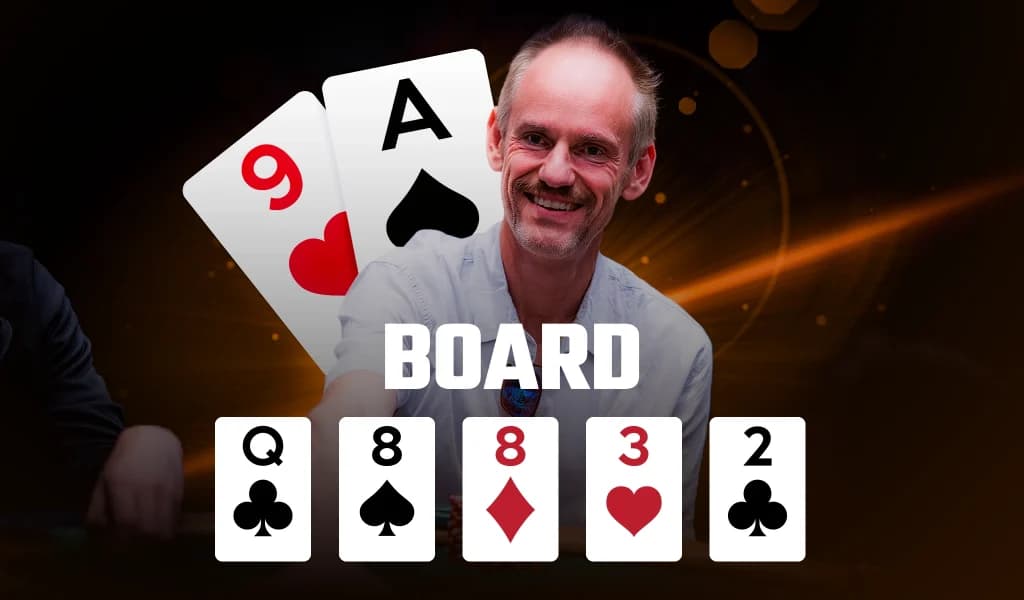
By the time the 2006 Main Event final table rolled around, Jamie Gold held a runaway chip lead. He also had an annoying and often effective habit of talking opponents into bad decisions.
Allen Cunningham, a five-time bracelet winner known for a tight, disciplined style, was one of the few players who people thought could catch Gold and knock him out.
On a board of Q-8-8-3-2, Gold put out a $2 million bet. Cunningham had nothing better than ace-high, but there was something in the feel of the hand, the size of the bet, or in Gold’s chatter that told him Gold was full of it.
Cunningham made the call, avoided being bullied, and basked in the cheers when Gold mucked two cards that couldn’t even beat ace-high. It remains one of the boldest hero calls ever made on poker’s biggest stage, and shows how often a tournament win requires risky bluffs and even riskier calls.
7. Erik Seidel’s Jack-High Hero Call on Dzmitry Urbanovich (2015 EPT Monte Carlo Super High Roller)
Heads-up for the €100,000 Super High Roller title, Seidel held J-4 and found himself facing Dzmitry Urbanovich. The flop was 6-A-A, and both players were content to check.
The turn fell with a king, and Seidel check-called a bet. When a 5 came on the river, Urbanovich fired a half pot bet, and Seidel went into the tank. His hand could only beat a stone bluff, so what was the right move?
He called, and Urbanovich flipped his 4-2 over. Seidel had made the right call, and showed that you sometimes just know your opponent hasn’t got anything. Urbanovich’s range had lots of power in it.
Any ace would value bet there. Some pocket pair full houses would, too. But Seidel somehow knew what was up.
It’s still cited as one of the great hero calls in modern poker.